What is islam

The word “Islam” is an Arabic word which means “submission to the will of God”. This word comes from the same root as the Arabic word “salam”, which means “peace”.

The Prophet Muhammad Peace be upon him

The mission of the last and final prophet of God was to simply teach that “there is nothing divine or worthy of being worshipped except for Almighty God”, as well as being a living example of God’s revelation. In simple terms, God sent the revelation to Muhammad, who in turn taught it, preached it, lived it and put it into practice.

The Holly Quran

The Arabic world “Al-Quran” literally means “the recitation”. When used in regards to Islam, the word Quran means God’s final message to mankind, which was revealed to the Prophet Muhammad. The Quran, sometimes spelled Koran, is the literal the word of God - as it clearly says time and time again.

The Oneness of God

The foundation of the Islamic faith is belief in the Oneness of Almighty God - the God of Abraham, Noah, Moses and Jesus. Islam teaches that a pure belief in One God is intuitive in human beings and thus fulfils the natural inclination of the soul

Islam for a Better Life

Islam teaches that true happiness can only be obtained by living a life full of God-consciousness and being satisfied with what God has given us.

vendredi 7 mars 2014

Importance of Prayer in Islam


The importance of the prayer in Islam cannot be understated.  It is the first pillar ofIslam that the Prophet, may the mercy and blessings of God be upon him, mentioned after mentioning the Testimony of Faith, by which one becomes a Muslim.  It was made obligatory upon all the prophets and for all peoples.  God has declared its obligatory status under majestic circumstances.  For example, when God spoke directly to Moses, He said,

“And I have chosen you, so listen to that which is inspired to you.  Verily, I am God! There is none worthy of worship but I, so worship Me and offer prayer perfectly for My remembrance.” (Quran 20:13-14)


Similarly, the prayers were made obligatory upon the Prophet Muhammad during his ascension to heaven.  Furthermore, when God praises the believers, such as in the beginning of the chapter entitled ‘al-Muminoon’ (the Believers), one of the first descriptions He states is their adherence to the prayers.

Once a man asked the Prophet about the most virtuous deed.  The Prophet stated that the most virtuous deed is the prayer.  The man asked again and again and for the first three times, the Prophet answered, “The prayer,” then on the fourth occasion he stated, “Jihad in the way of God.”[1]

The importance of prayer is demonstrated in many of the Prophet’s statements.  For example, the Prophet said,

“The first matter that the slave will be brought to account for on the Day of Judgment is the prayer.  If it is sound, then the rest of his deeds will be sound.  And if it is incomplete, then the rest of his deeds will be incomplete.”[2]

The importance of the prayers lies in the fact that no matter what actions one performs in his life, the most important aspect is one’s relationship to God, that is, one’s faith (imaan), God-consciousness (taqwa), sincerity (ikhlas) and worship of God (ibaadah).  This relationship with God is both demonstrated and put into practice, as well as improved and increased, by the prayer.  Therefore, if the prayers are sound and proper, the rest of the deeds will be sound and proper; and if the prayers are not sound and proper, then the rest of the deeds will not be sound and proper, as the Prophet himself stated.

In reality, the prayer is performed properly – with true remembrance of God and turning to Him for forgiveness – it will have a lasting effect on the person.  After he finishes the prayer, his heart will be filled with the remembrance of God.  He will be fearful as well as hopeful of God.  After that experience, he will not want to move from that lofty position to one wherein he disobeys God.  God has mentioned this aspect of the prayer when He has said,

“Verily, the prayer keeps one from the great sins and evil deeds” (Quran 29:45)

Nadwi has described this effect in the following eloquent way,

Its aim is to generate within the subliminal self of man such spiritual power, light of faith and awareness of God as can enable him to strive successfully against all kinds of evils and temptations and remain steadfast at times of trial and adversity and protect himself against the weakness of the flesh and the mischief of immoderate appetites.[3]

The overall affect that the properly performed prayers should have upon humans is described in other verses in the Quran:

“Verily, man was created impatient, irritable when evil touches him and ungenerous when good touches him.  Except for those devoted to prayer those who remain constant in their prayers…” (Quran 70:19-23)
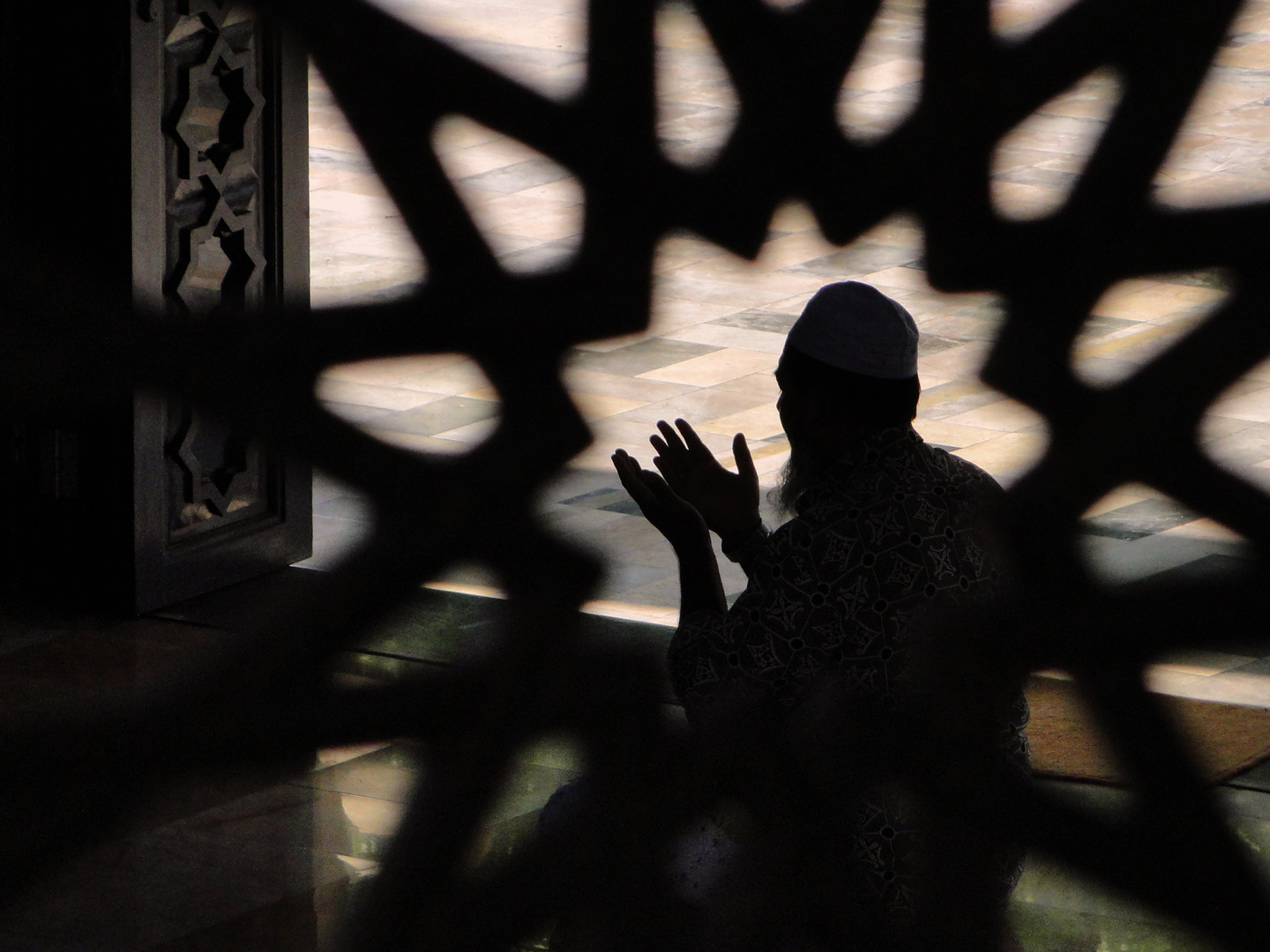

As for the Hereafter, God’s forgiveness and pleasure is closely related to the prayers.  The Messenger of God said,

“God has obligated five prayers.  Whoever excellently performs their ablutions, prays them in their proper times, completes their bows, prostrations and khushu[4], has a promise from God that He will forgive him.  And whoever does not do that has no promise from God.  He may either forgive him or punish him.”

The prayers are a type of purification for a human being.  He turns and meets with his Lord five times a day.  As alluded to above, this repeated standing in front of God should keep the person from doing sinful acts during the day.  Furthermore, it should also be a time of remorse and repentance, such that he earnestly asks God for forgiveness for those sins that he committed.  In addition, the prayer in itself is a good deed that wipes away some of the evil deeds that he performed.  These points can be noted in the following hadith of the Prophet, may the mercy and blessings of God be upon him:

“If a person had a stream outside his door and he bathed in it five times a day, do you think he would have any filth left on him?” The people said, “No filth would remain on him whatsoever.” The Prophet then said, “That is like the five daily prayers: God wipes away the sins by them.” (Saheeh Al-Bukhari, Saheeh Muslim)

In another hadith, the Prophet said,

“The five daily prayers and the Friday Prayer until the Friday prayer are expiation for what is between them.” (Saheeh Muslim)

----------------------------------------------
[1] This is form a hadith recorded by Ahmad and ibn Hibban.  According to al-Albani, the hadith is hasan.  Muhammad Nasir al-Din al-Albani, Sahih al-Targheeb wa al-Tarheeb (Beirut: al-Maktab al-Islami, 1982), vol.  1, p.  150
[2] Recorded by al-Tabarani.  According to al-Albani, it is Sahih.  Al-Albani, Sahih al-Jami, vol.1, p.  503.
[3] Nadwi, p. 24

[4] Khushu` in the prayer is where the person’s heart is attuned to the prayer.  This feeling in the heart is then reflected on the body.  The person remains still and calm.  His gaze is also lowered.  Even his voice is affected by this feeling in the heart.  For more details on this concept (as well as the difference between it and khudhu`), see Muhammad al-Shaayi, al-Furooq al-Laughawiyyah wa Atharahaa fi Tafseer al-Quran al-Kareem (Riyadh: Maktabah al-Ubaikaan, 1993), pp.  249-254.  

Prayer in Islam


Five times!  When some hear this, they throw their hands up in horror and wonder about the amount of time this must take and how it can be slotted into one 24 hr period.  Others, who are used to communicating with God in their own form of prayer will often question the rules and regulations that are attached to prayer in Islam.  God, they say, is accessible at any time.  According to Muslim belief that is correct.  God is accessible at anytime and in any place.  Muslims call on God frequently throughout the day and night.  They raise their hands in supplication and ask for His help, mercy, and forgiveness.

This, however, is not the act that Muslims refer to as prayer.  This is called making dua (supplications) and it is similar to Christian prayer in that it is calling on God, asking for His help and  acknowledging His greatness.  For Muslims prayer denotes a set of ritual movements and words said throughout fixed times in a day and night.  God says in Quran, “Verily, the prayer is enjoined on the believers at fixed hours”.  (Quran 4:103)  Muslims pray in the early morning before sunrise, in the middle of the day, in the afternoon, at sunset and at night.  Muslims pray in obedience to God because they believe God created humankind for no other purpose except to worship Him.
“And I did not create man...except to worship Me Alone” (Quran 51:56)
Consequently, for a believer, worship is a way of life.  Prayer at fixed times  serves as a reminder of why we are here and helps to direct a person’s thoughts and actions away from sin and onto remembrance of God.  Prophet Muhammad emphasized the importance of prayer when he explained its ability to remove sin.  He said, “What would you think if there was a river by the door of any one of you and he bathed in it five times a day, would there be any trace of dirt left on him?”  They said, “No trace of dirt would be left on him.”  He said, “That is like the five daily prayers, by means of which God erases sin.”
Saheeh Al-Bukhari and Saheeh Muslim
Prayer is just one act amongst many acts of worship however;
 it holds a very special status in Islam because of the way it was enjoined.  It was not brought down to earth by an Angel rather it was bestowed upon Prophet Muhammad during his unique ascension into the heavens.  Fifty prayers were first enjoined upon the believers but this was eventually reduced to five, while the reward for prayer remains as if it were still fifty.  This reduction shows just how great God’s love for humanity is, a few minutes throughout the day is rewarded as if it were continuous worship.
In prostration, when the forehead touches the ground, the believer is closer to God than at any other time.  There is now an opportunity to make supplication, asking God for help, mercy or forgiveness (this can be in any language).  Towards the end of the prayer, Muslims sit to praise and ask God to bless Prophets Muhammad and Abraham.  The prayer concludes with the words Assalamu alaikum wa Rahmatullah (May God’s peace and blessings be upon you) spoken while turning the head towards the right and then the words are repeated while turning towards the left.
The prayer has now ended and the world comes rushing back.  However, for those few minutes the believer was alone with God.  Whether he or she was praying alone or within a congregation, the connection was between God and the individual.  It was a moment of bliss, peace, and tranquillity.  Prayer is a reminder and a comfort.  Every hour of every day somewhere in the world, a Muslim is praying.  The believer is seeking the comfort that comes from feeling close to God, the peace that comes from feeling God’s love and mercy and the serenity that comes from knowing that God is real.


Acts of worship prescribed on fridays


Acts of worship which are prescribed on Fridays.

1 – Salaat al-Jumu’ah (Friday prayer) [al-Jumu’ah 62:9]

2 – Making a lot of du’aa’. [al-Bukhaari, 893; Muslim, 852]
 
3 – Reading Soorat al-Kahf (Before sun sets on Friday).

 [Saheeh al-Targheeb, 836]

4 – Sending a lot of blessings upon the Prophet 

(peace and blessings 

of Allaah be upon him). [Abu Dawood, 1047]


Friday – The Best Day of the Week


Friday is a very important day for Muslims.  It is more significant and more beneficial than any other day of the week.  It is the day that Muslims gather together to pray in congregation. Directly before the prayer they listen to a lecture designed to empower them with valuable knowledge about God, and the religion of Islam.  It is a blessed day that has been designated as such by God, Almighty; no other day of the week shares its virtues.

A believer’s entire life is one of worship; even celebrations are conducted as worship.  While there is no special place or special time to worship God, there are moments, days, or times that God has made more superior; Friday is one of those times.


From the traditions of Prophet Muhammad, may the mercy and blessings of God be upon him, we learn that “The best day in the sight of God is Friday, the day of congregation”.[1]  Congregational prayers (obligatory for men) are one of the most strongly emphasized duties in Islam.  It is a time when Muslims come together to worship One God, and  find strength and comfort by standing shoulder to shoulder and reaffirming their faith and devotion to Him.

“O you who believe! When the call to prayer is proclaimed on Friday hasten earnestly to the remembrance of God, and leave aside business.  That is best for you if you but knew.” (Quran 62:9)

In many predominantly Muslim countries Friday is a weekly holiday, sometimes combined with either Thursday or Saturday.  However there is no mandatory closing of businesses except during the time of the congregational prayer.  In western countries many Muslims try to take their lunch break during the time for prayer, usually in the very early afternoon.

Prophet Muhammad told his followers  that “The five daily prayers, and from one Friday prayer till the next, serves as an expiation for whatever sins have been committed between them, provided one does not commit any major sin.”[2]

It is important that a Muslim not neglect Friday Prayer due to work, study, or other worldly matters.  Believers should make attending this prayer a priority since ignoring it three times  in a row, with no valid reason, will cause a believer to stray from the straight  path.

While it is only men who are obliged to attend the Friday congregational prayer there are also many recommended acts that can be performed by men, women or children during this day.  These acts include, taking a bath and wearing clean clothes, saying numerous supplications to God, sending blessings upon Prophet Muhammad, and reading Chapter 18 of the Quran, which is entitled ‘The Cave’.

Prophet Muhammad, may the mercy and blessings of God be upon him, said, “There is no day more virtuous than Friday.  In it there is an hour in which no one will pray to God except that God will hear his prayer”.[3]

"Friday consists of twelve hours, one of which is the hour where supplications are granted for believers.  This hour is sought during the last hour after Asr (the third prayer in the day).[4]"

"Whoever recites ‘The Cave’ on Friday, God will give him a light to the next Friday."[5]

"The best day on which the sun rises is Friday.  It is the day Adam was created.  It is the day when Adam entered the Heavenly Gardens, the day when he was expelled from it and also the day he died.  Friday is the day on which the Day of Resurrection will take place.”[6]

Friday is also the day on which one of the greatest verses in the Quran was revealed.

“This day, I have perfected your religion for you, completed My Favor upon you, and have chosen Islam as your religion.” (Quran 5:3)


A story from the life of the second Caliph Omar, illustrates the significance of Friday.   A learned person from among the Jews said to Omar Ibn Al Khattab “In the Quran you people read a certain verse; if that verse had been revealed to us, we would have celebrated that day annually.” Omar asked, “Which verse is that?”  The man replied, “This day, I have perfected your religion for you’.  Omar then said, “Verily I remember the day and the place where this verse was revealed.   It was already a double celebration for us.  Firstly it was Friday-a day of Eid (celebration) for all Muslims and secondly, it was the day of Arafat – the most important day of the Hajj.” Omar further stated that this verse was revealed after Asr (afternoon prayer) while Prophet Muhammad was sitting on his camel.

Friday is a special day; the congregational prayer performed on this day holds special significance in the life of a Muslim.  This is well noted and discussed by Islamic scholars both past and present.  Thirteenth century Islamic scholar Ibn Taymiyyah said: “The most excellent day of the week is Friday according to the consensus of scholars” [7]  and his student Ibnul -Qayyim mentions 32 special characteristics of Friday in his book Zad Al- Ma’ad.   Prophet Muhammad said “Verily, this is the Eid day (day of celebration) that God has prescribed for the Muslims”[8].  Believers would be wise to take advantage of the blessings God sends down to His slaves on Friday.  This is a day of congregation, a day of celebration and a day of contemplation and supplication.
 -------------------------------------------------
Footnotes:
[1] Bayhaqi, authenticated by Sheikh Al Albani.
[2] Saheeh Muslim
[3] At Tirmidhi
[4] Abu Dawood,.  An Nasei
[5] Bayhaqi
[6] Saheeh Muslim, Abu Dawood, An Nasei & At Tirmidhi.
[7] Majmu’ah Fatawa

[8] Ibn Majah, authenticated by Sh Al Albani.

jeudi 6 mars 2014

The Second Pillar of Islam: The Prayer


Salah is the daily ritual prayer enjoined upon all Muslims as one of the five Pillars of Islam
 It is performed five times a day by all Muslims.  Salah is a precise worship, different from praying on the inspiration of the moment.  Muslims pray or, perhaps more correctly, worship            
 five times throughout the day:
·        Between first light and sunrise.
·        After the sun has passed the middle of the sky.
·        Between mid-afternoon and sunset.
·        Between sunset and the last light of the day.
·        Between darkness and midnight.


Each prayer may take at least 5 minutes, but it may be lengthened as a person wishes.  Muslims can pray in any clean environment, alone or together, in a mosque or at home, at work or on the road, indoors or out.  Under special circumstances, such as illness, journey, or war, certain allowances in the prayers are given to make their offering easy.
Having specific times each day to be close to God helps Muslims remain aware of the importance of their faith, and the role it plays in every part of life.  Muslims start their day by cleaning themselves and then standing before their Lord in prayer.  The prayers consist of recitations from the Quran in Arabic and a sequence of movements: standing, bowing, prostrating, and sitting.  
All recitations and movements express submission, humility, and homage to God.  The various postures Muslims assume during their prayers capture the spirit of submission; the words remind them of their commitments to God.  The prayer also reminds one of belief in the Day of Judgment and of the fact that one has to appear before his or her Creator and give an account of their entire life.  This is how a Muslim starts their day.  In the course of the day, Muslims dissociate themselves form their worldly engagements for a few moments and stand before God. 
 This brings to mind once again the real purpose of life.
These prayers serve as a constant reminder throughout the day to help keep believers mindful of God in the daily stress of work, family, and distractions of life.  Prayer strengthens faith, dependence on God, and puts daily life within the perspective of life to come after death and the last judgment.  As they prepare to pray, Muslims face Mecca, the holy city that houses the Kaaba (the ancient place of worship built by Abraham and his son Ishmael).  At the end of the prayer, the shahada (testimony of faith) is recited, and the greeting of peace, “Peace be upon all of you and the mercy and blessings of God,” is repeated twice.
Though individual performance of salah is permissible, collective worship in the mosque has special merit and Muslims are encouraged to perform certain salah with others.  With their faces turned in the direction of the Kaaba in Mecca, the worshipers align themselves in parallel rows behind the imam, or prayer leader, who directs them as they execute the physical postures coupled with Quran recitations.  In many Muslim countries, the “call to prayer,” or ‘Adhan,’ echo out across the rooftops.  Aided by a megaphone the muezzin calls out:
Allahu Akbar (God is the greatest),

Ash-hadu an-laa ilaaha ill-Allah (I witness that none deserves worship except God).

Ash-hadu anna Muhammad-ar-Rasool-ullah (I witness that Muhammad is the messenger of God).

Hayya ‘alas-Salah (Come to prayer!)

Hayya ‘alal-Falah (Come to prosperity!)

Allahu Akbar (God is the greatest),

La ilaaha ill-Allah (None deserves worship except God).


Friday is the weekly day of communal worship in Islam.  The weekly convened Friday Prayer is the most important service.  The Friday Prayer is marked by the following features:
·        It falls in the same time as the noon prayer which it replaces.
·        It must be performed in a congregation led by a prayer leader, an ‘Imam.’ It can not be offered individually.  Muslims in the West try to arrange their schedules to allow them time to attend the prayer.
·        Rather than  a day of rest like the Sabbath, Friday is a day of devotion and extra worship.  A Muslim is allowed normal work on Friday as on any other day of the week.  They may proceed with their usual activities, but they must break for the Friday prayer.  After the worship is over, they can resume their mundane activities.
·        Typically, the Friday Prayer is performed in a mosque, if available.  Sometimes, due to unavailability of a mosque, it may be offered at a rented facility, park, etc.
·        When the time for prayer comes, the Adhan is pronounced  The Imam then stands facing the audience and delivers his sermon (known as khutba in Arabic), an essential part of the service of which its attendance is required.  While the Imam is talking, everyone present listens to the sermon quietly till the end.  Most Imams in the West will deliver the sermon in English, but some deliver it in Arabic.  Those who deliver it in Arabic usually deliver a short speech in the local language before the service.
·        There are two sermons delivered, one distinguished from the other by a brief sitting of the Imam.  The sermon is commenced with words of praise of God and prayers of blessing for Prophet Muhammad, may the mercy and blessings of God be upon him.
·        After the sermon, the prayer is offered under the leadership of the Imam who recites the Fatiha and the other Quranic passage in an audible voice.  
When this is done, the prayer is completed.
Special, large congregational prayers, which include a sermon, are also offered at late morning on the two days of festivity.  One of them is immediately following the month of fasting, Ramadan, and the other after the pilgrimage, or hajj.
Although not religiously mandated, individual devotional prayers, especially during the night, are emphasized and are a common practice among pious Muslims.

The First Pillar (faith or shahada).


The Shahada is the Muslim profession of faith and the first of the ‘Five Pillars’ of Islam.  The word shahada in Arabic means ‘testimony.’  The shahada is to testify to two things:
 -  Nothing deserves worship except God (Allah).
-  Muhammad is the Messenger of God (Allah).
A Muslim is simply one who bears witness and testifies that “nothing deserves worship except God and Muhammad is the messenger of God.” One becomes a Muslim by making this simple declaration.


It must be recited by every Muslim at least once in a lifetime with a full understanding of its meaning and with an assent of the heart.  Muslims say this when they wake up in the morning, and before they go to sleep at night.  It is repeated five times in the call to prayer in every mosque.  A person who utters the shahada as their last words in this life has been promised Paradise.
Many people ignorant of Islam have misconceived notions about the Allah, used by Muslims to denote God. Allah is the proper name for God in Arabic, just as "Elah", or often "Elohim", is the proper name for God in Aramaic mentioned in the Old Testament.  Allah is also His personal name in Islam, as "YHWH" is His personal name in Judaism. However, rather than the specific Hebrew denotation of "YHWH" as "He Who Is", in Arabic Allah denotes the aspect of being “The One True Deity worthy of all worship”.  Arabic speaking Jews and Christians also refer to the Supreme Being as Allah.

- Nothing deserves worship except God (Allah).

The first part of this testimony states that God has the exclusive right to be worshipped inwardly and outwardly, by one’s heart and limbs.  In Islamic doctrine, not only can no one be worshipped apart from Him, absolutely no one else can be worshipped along with Him.  He has no partners or associates in worship.  Worship, in its comprehensive sense and all its aspects, is for Him alone.  God’s right to be worshipped is the essential meaning of Islam’s testimony of faith: Lā ‘ilāha ‘illā llāh.  A person becomes Muslim by testifying to the divine right to worship.  It is the crux of Islamic belief in God, even all of Islam.  It is considered the central message of all prophets and messengers sent by God - the message of Abraham, Isaac, Ishmael, Moses, the Hebrew prophets, Jesus, and Muhammad, may the mercy and blessings of God be upon them.  For instance, Moses declared:
“Hear, O Israel The Lord our God is one Lord.” (Deuteronomy 6:4)
Jesus repeated the same message 1500 years later when he said:
“The first of all the commandments is, “Hear, O Israel; the Lord our God is one Lord.” (Mark 12:29)
…and reminded Satan:
“Away from me, Satan!  For it is written: Worship the Lord your God, and serve Him only.” (Matthew 4:10)
Finally, the call of Muhammad, some 600 years after Jesus, reverberated across the hills of Mecca, ‘And your God is One God: there is no god but He.’ (Quran 2:163).  
They all declared clearly:
“Worship God!  You have no other god but Him.” (Quran 7:59, 7:73; 11:50, 11:84; 23:32)
But by a mere verbal profession alone, one does not become a complete Muslim.  To become a complete Muslim one has to fully carry out in practice the instruction given by Prophet Muhammad as ordained by God.  This brings us to the second part of the testimony.

- Muhammad is the Messenger of God (Allah).

Muhammad was born in Mecca in Arabia in the year 570 CE.  His ancestry goes back to Ishmael, a son of Prophet Abraham.  The second part of the confession of faith asserts that he is not only a prophet but also a messenger of God, a higher role also played by Moses and Jesus before him.  Like all prophets before him, he was a human being, but chosen by God to convey His message to all humanity rather than one tribe or nation from among the many that exist.  For Muslims, Muhammad brought the last and final revelation.  In accepting Muhammad as the “last of the prophets,” they believe that his prophecy confirms and completes all of the revealed messages, beginning with that of Adam.  In addition, Muhammad serves as the preeminent role model through his life example.  The believer’s effort to follow Muhammad’s example reflects the emphasis of Islam on practice and action.

Satan’s Manipulation of the Christians


by Ibn Qayyim al-Jawziyyah


It is obvious to anyone with reason that Satan has greatly manipulated these misled people (Christians). He called them and they responded to him; he befooled them and they obeyed him.

He manipulated them with regards to Allah, 
the Exalted and Most High. 
He manipulated them with regards to Jesus (peace be upon him). 
He manipulated them with regards to the cross and 
the worship of it.


He also manipulated them with regards to making pictures and statues in churches and then worshipping them, so you will not find one of their churches without the picture of Mary and Jesus, saints and other holy individuals and martyrs of theirs. 
Most of them prostrate to pictures and statues, and pray to them instead to Allah the Most High…
The typical example of what these polytheists are doing is like that of a servant of a king who entered upon a man, so the man jumped from his place, prostrated to the servant, worshipped him, and did to him what he was not supposed to do except to the king. 
Every rational person would consider him an ignorant and a fool because of what he did, since he did to the king’s servant what he was supposed to do only to the king, in terms of honoring, humbleness and humility.
It is well-known that what the servant did here is more likely to cause the king to hate him and look down upon him than to honor him and exalt his status.
This is the situation of one who prostrates to creation, or a picture of creation. This is because he resorted to prostration which is the greatest means of reaching the Lord’s pleasure. Such an action is not valid except for Allah, so there is no greater repulsiveness or injustice than doing it for a picture or statue of a servant and equalizing between Allah and His servant.
This is why Allah the Most High said,

“Verily, shirk (polytheism, setting up partners with Allah) is a great injustice.” [Luqman: 13]
Allah the Most High has created his worshippers prone to recognize ugliness in expressing exaltation, glorification, sumbisiveness and humility towards king’s slaves and servants (as such actions are usually done for the king).
So what is the situation of the one who shows this type of reverence to king’s enemies? For Satan is the enemy of Allah, and the polytheist is in reality setting Satan, not Allah’s prophets and righteous servants¸ as a partner with Allah. For the prophets and righteous servants have nothing to do with those who set them as partners with Allah; they are against them and the strongest in hatred of all people towards them. 
The polytheists, therefore, are only setting up as partners with Allah His enemies, and equalizing between them and Allah in worship, exaltation, prostration and humility.
This is why the invalidity and ugliness of polytheism is recognized by sound innate nature and reason, and this type of ugliness is recognized more clearly than its other types.
The intent here was to mention Satan’s manipulation of these people in both the foundation and branches of their religion.